Enrolling for our new exercise study!

New physical exercise study!

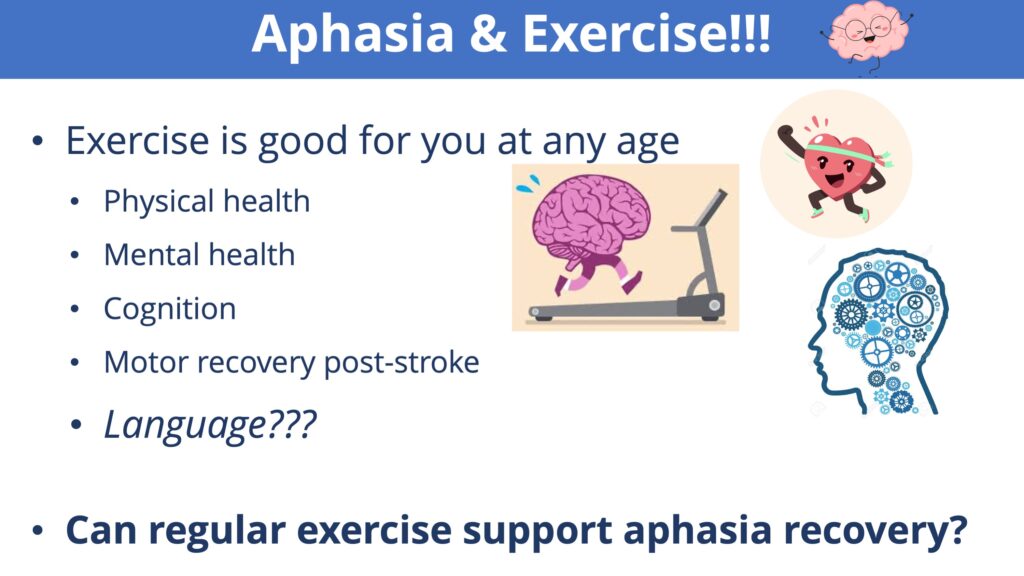
We are currently recruiting cohorts for a new Exercise Based Aphasia study! If you or a loved one is diagnosed with Aphasia after a stroke and wants to be a part of a new study that attempts to understand how different exercises can improve fitness, motor, cognitive, and language abilities. This novel research opens the door to new treatments for stroke recovery!

Who can join


You can take part if you:
– had a stroke and now have aphasia (language problems)
– can walk on your own (using a single-point cane is OK)
– can safely do regular exercise

Interested?

Want to be active and contribute to science? Check out our current study page to learn more!

New NIH Funding to Advance our Aphasia Recovery Research


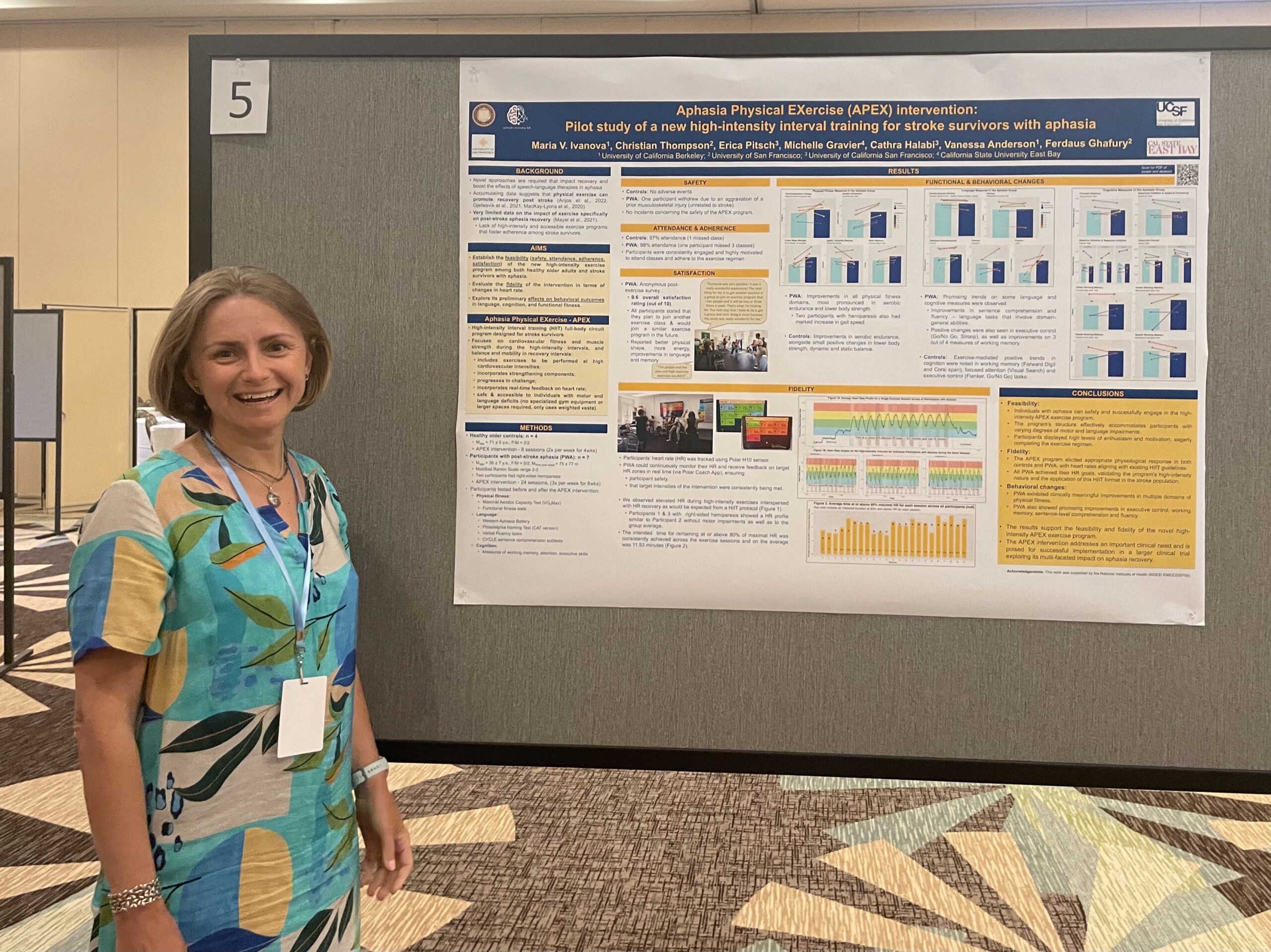
We are thrilled to announce that our team just received a new R01 grant from the National Institute on Deafness and Other Communication Disorders (NIDCD)R01DC022663; PI: Dr. Maria Ivanova. This exciting new project titled “Exercising language: Behavioral and neurophysiological changes after high-intensity exercise training in post-stroke aphasia” is a direct continuation of our prior work on exercise and aphasia. In this project we will explore how high-intensity physical exercise, a promising yet underutilized adjuvant intervention, can enhance language, cognition, brain health, and emotional well-being in stroke survivors with aphasia.

Building on the encouraging findings from our pilot work, the new grant will enable us to launch a large-scale clinical trial to:

Evaluate how high-intensity exercise influences language, cognitive, motor, and psychosocial outcomes

Examine how improvements in physical fitness relate to gains in communication and cognitive skills

Investigate the neurovascular mechanisms that link exercise to recovery in the brain

This award marks an exciting next step in the APEX Team’s mission to uncover innovative, evidence-based ways to support holistic recovery after stroke.

Proudly powered by WordPress

Participation in the Stroke Onward Panel


Dr. Maria Ivanova took part in a panel discussion hosted by Stroke Onward, titled “Stronger Together: Community Programs Supporting the Emotional Journey in Recovery for People with Aphasia.” Panelists and audience members explored ways to engage people with aphasia in program designexpand facilitation models and peer-led groups, and build stronger partnerships across clinical, educational, research, and community settings. Through these collaborative discussions—and the actions that follow—the APEX Team aims to enhance quality of life and promote sustainable, inclusive support for stroke survivors with aphasia and their families throughout every stage of recovery.

Proudly powered by WordPress

APEX Team Presents Innovative Research on Remote Stroke Recovery Intervention

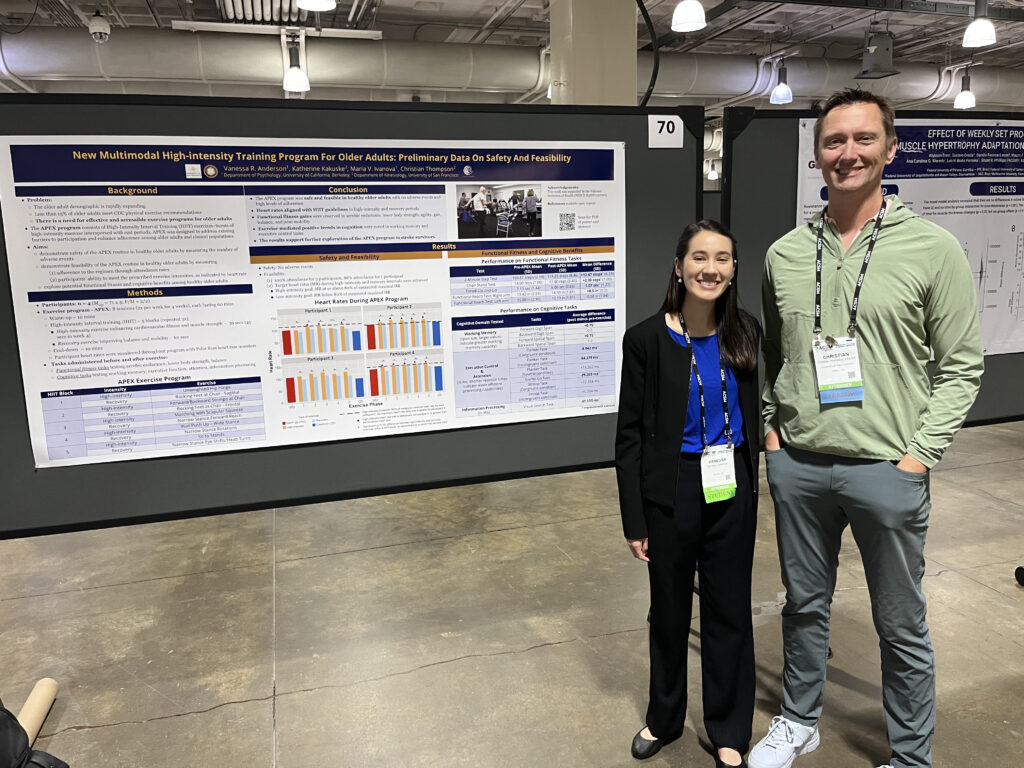
 University of San Francisco undergraduate Lauren Cervantes and co-investigator Dr. Christian Thompson represented the study team at the Southwest Chapter of the American College of Sports Medicine (ACSM) Annual Meeting in Burbank, California.

Their poster presentation shared exciting findings from the Spring 2025 pilot project, which demonstrated that stroke survivors with aphasia can successfully participate in a remotely delivered high-intensity functional training program. This work highlights a promising new avenue for making exercise-based recovery more accessible to individuals living with aphasia.

Proudly powered by WordPress

Recruiting for another exercise intervention study!

We are currently recruiting participants with post-stroke aphasia for another study to explore the impact of exercise on language and cognitive outcomes.

You can participate if:

• have aphasia (language deficits) following stroke;

• were proficient in English before the stroke;

• are between the ages of 18 and 80;

• can walk on your own (single-point cane accepted);

• can participate in regular physical exercise.

Please contact us for more information and to find out if you can participate!